
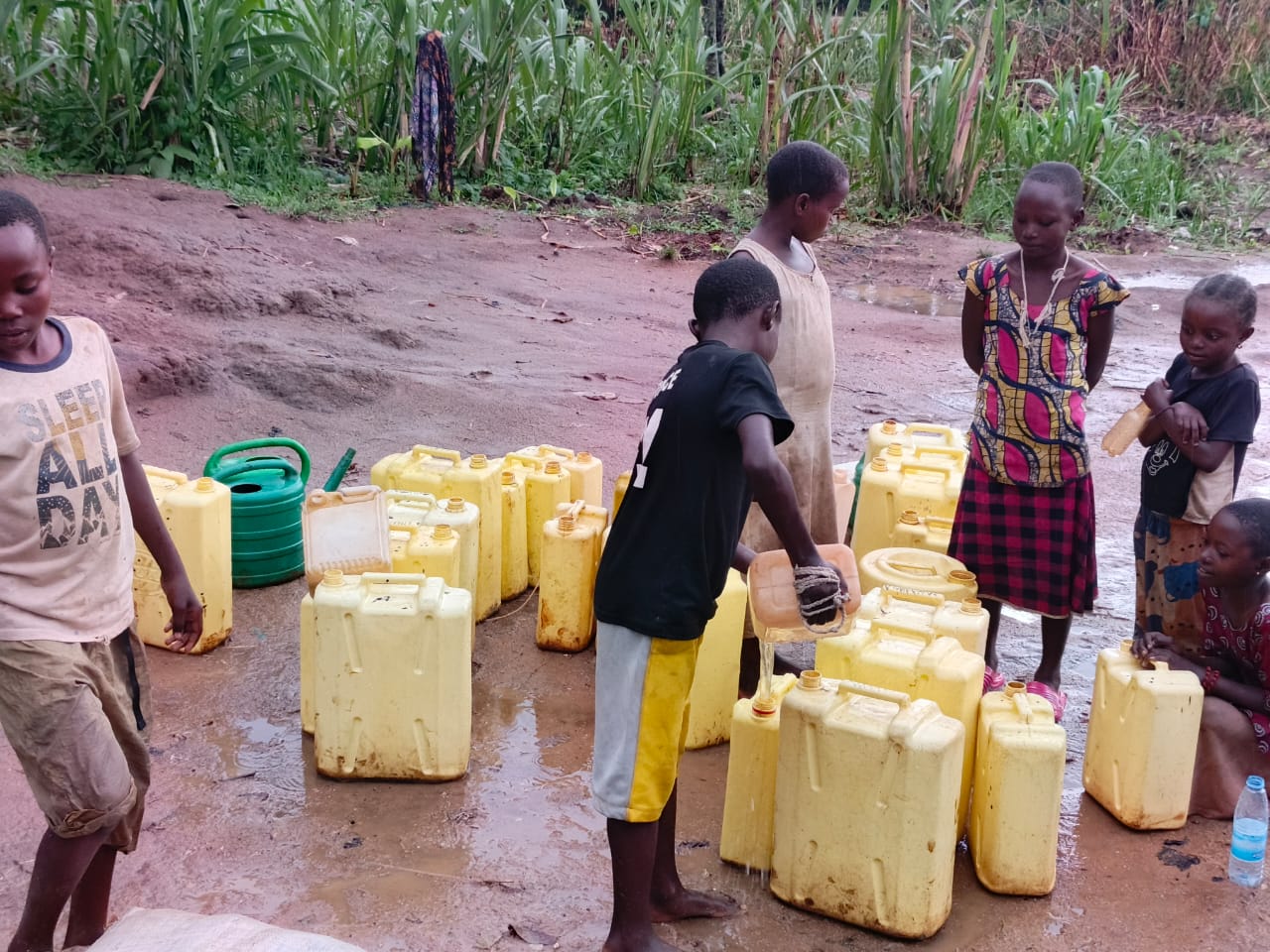
Nabingora Village is home to over 5,000 refugees and about 200 host homes, most of whom have limited access to safe drinking water. Inconsistent water quality exposes this community to waterborne diseases such as diarrhea, cholera, and typhoid. By ensuring that this community has better access to safe water, preventing deadly water-borne diseases, this will not only constitute a life-saving intervention, but it will also help reduce the risk of gender-based violence against women and girls, who otherwise have to collect water at distant and congested water points. The intervention will elevate the lives of the villagers and enhance their economic growth opportunities.
Nabingora Community has 2 schools. The administration of one of the schools approached us and organized the community so that they can participate in the Community Funded Well Program.
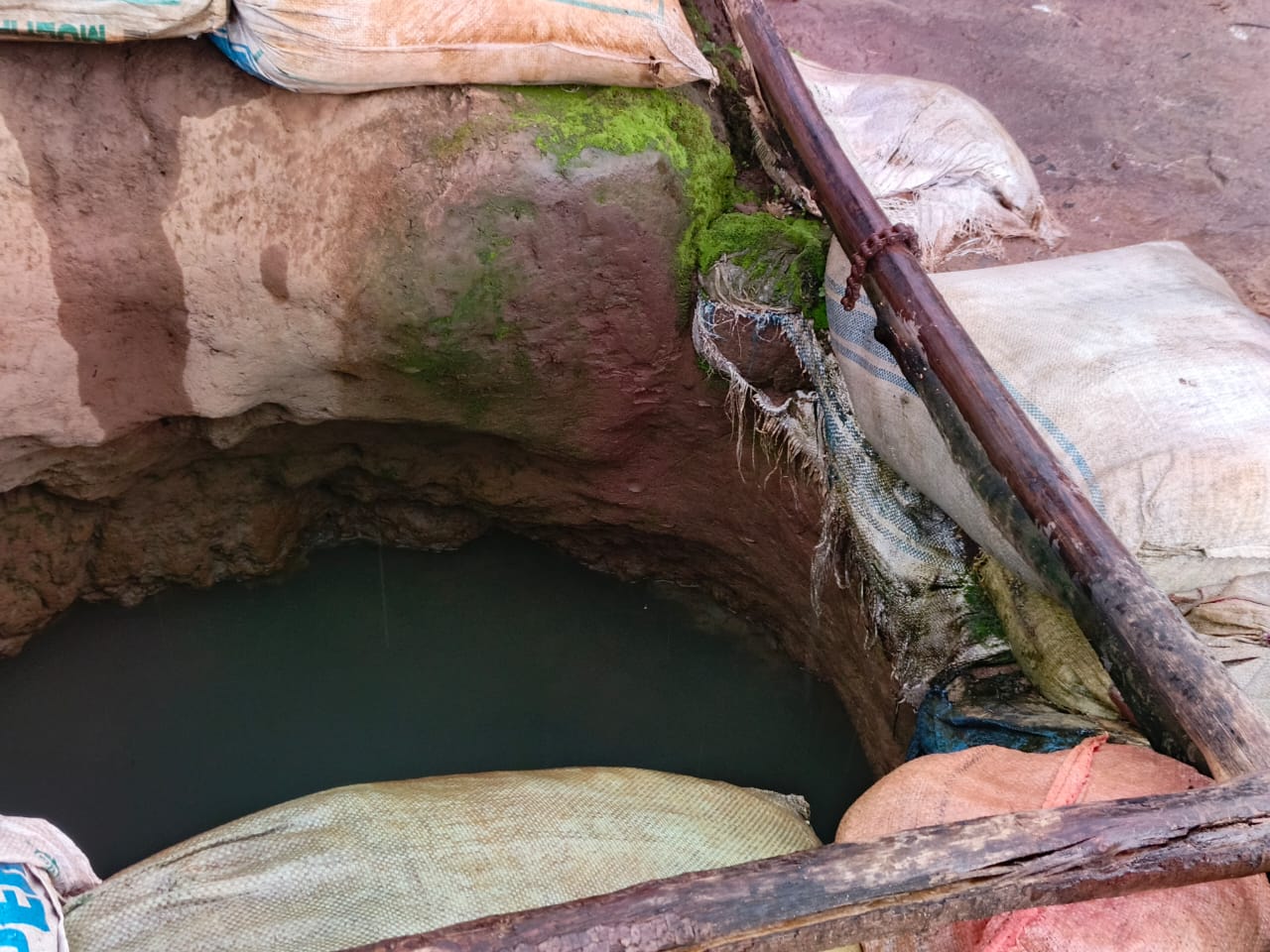
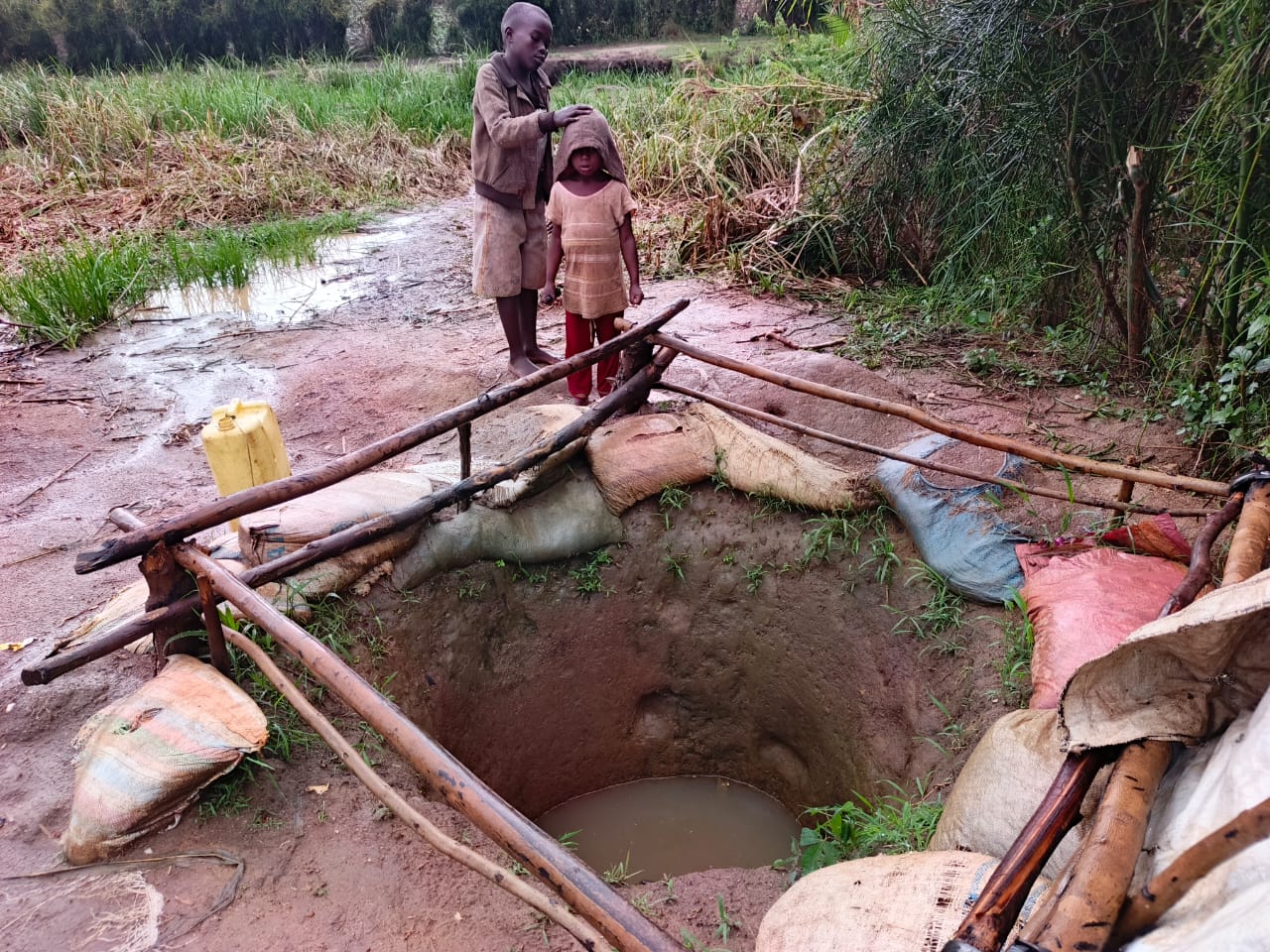
Pictured: Oscar and his sister Eva are collecting water from this pond that was dug by the community as their water source. The water is dirty and unsafe, but more so the pond is unprotected and dangerous.
The surface water pond that the community currently uses
Children waiting to collect water in turns at the community water source; a surface pond.